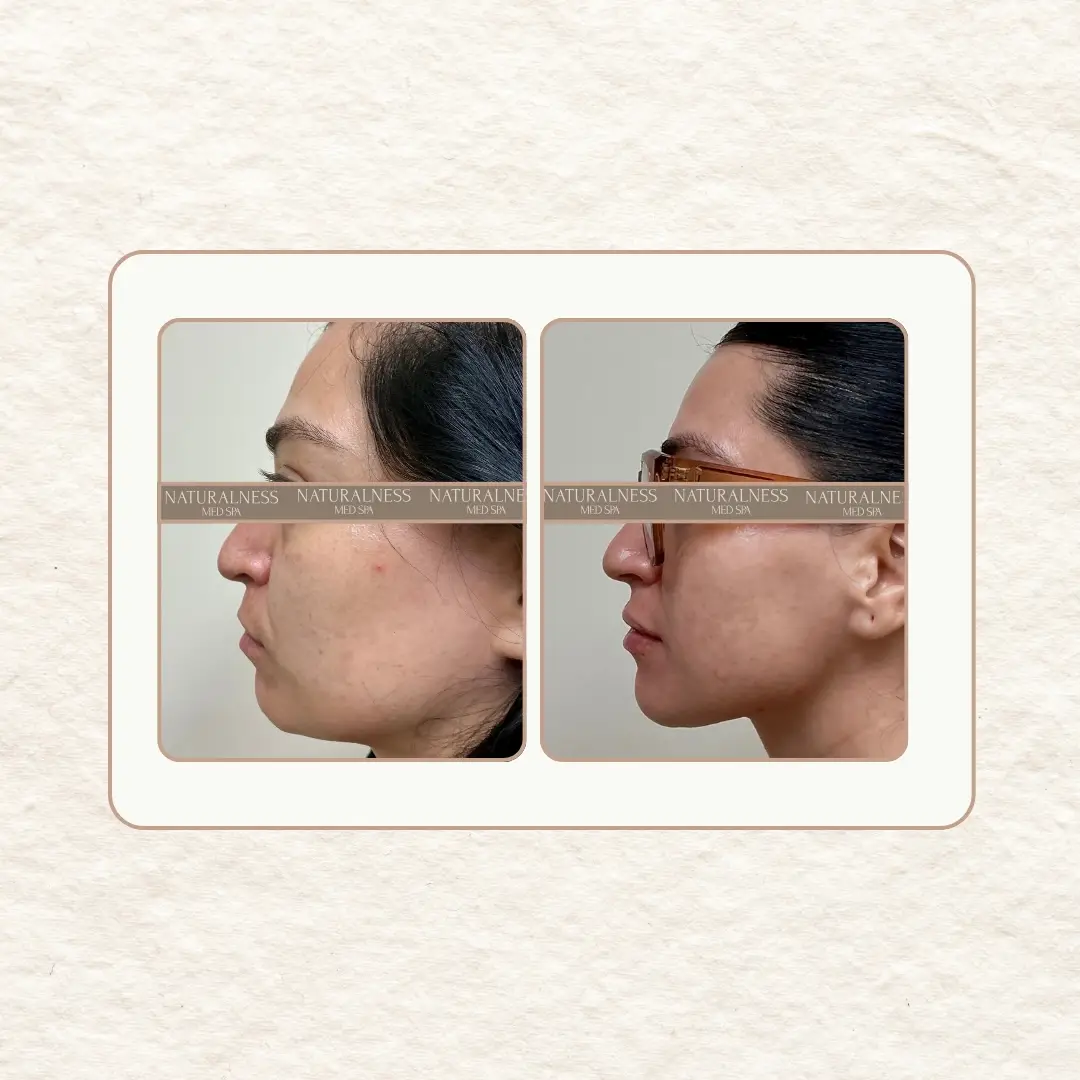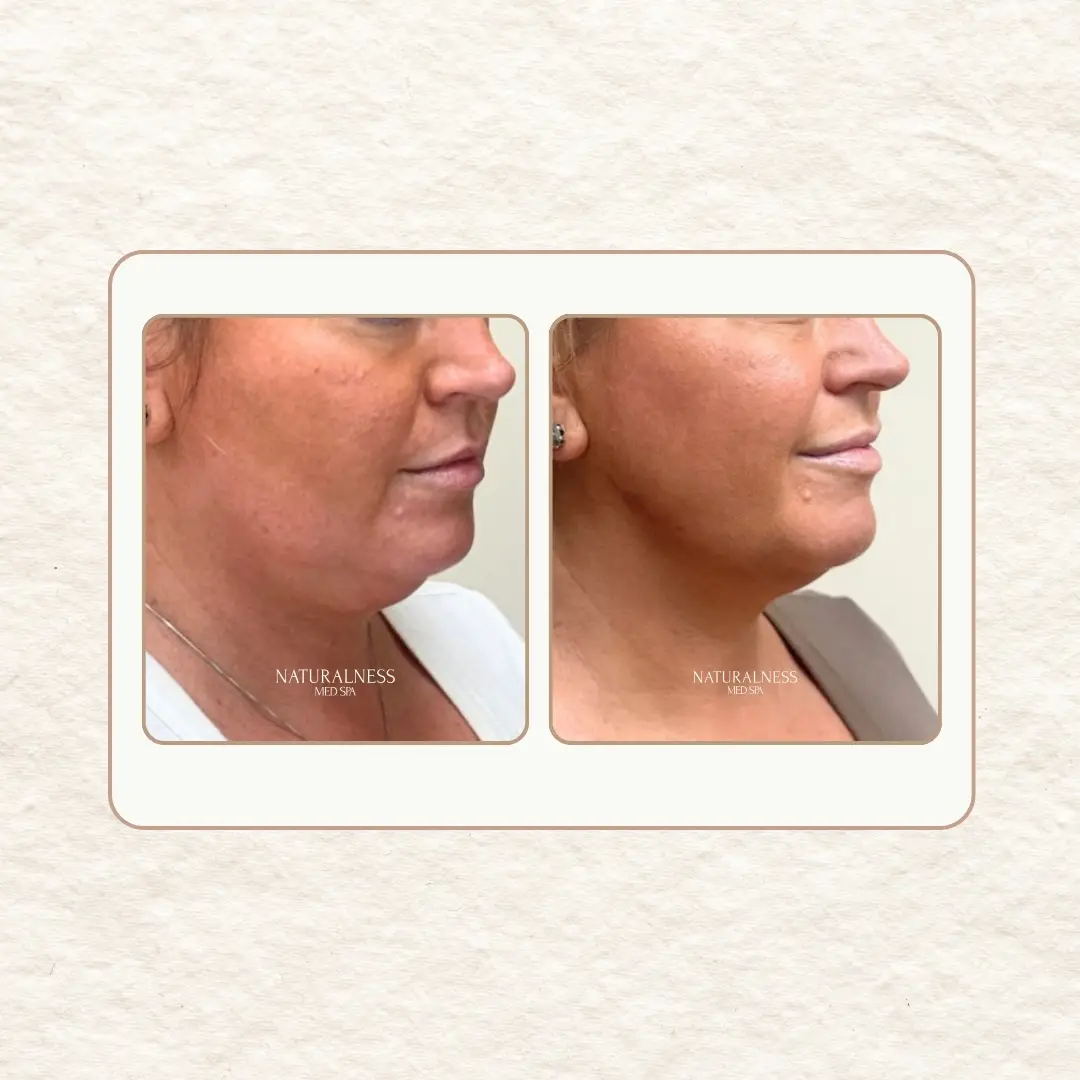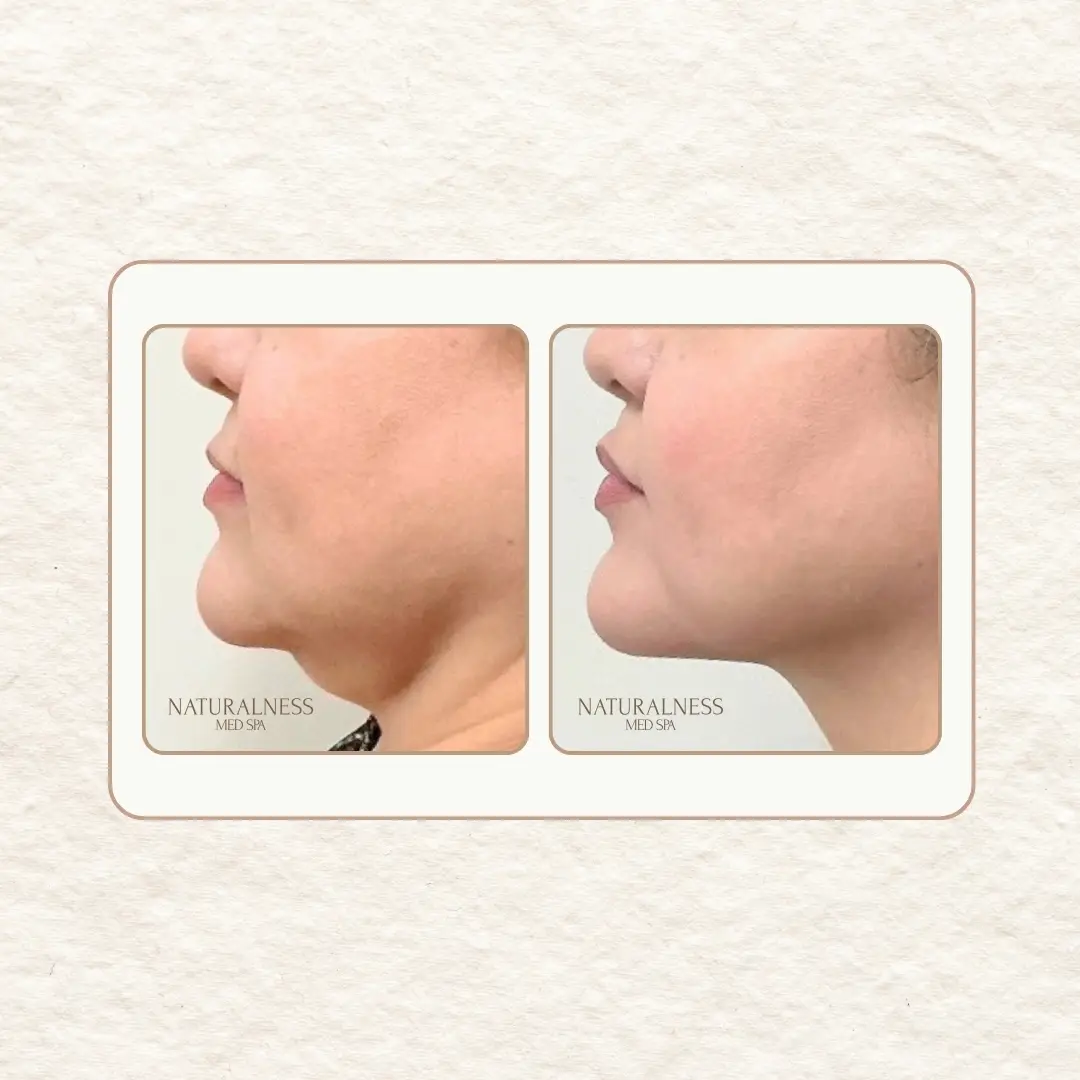

Four Reasons for a Double Chin. Only One of Them Is Fat.
Most people walk into a consultation for double chin treatment in Murrieta having already diagnosed themselves. They point at the area under their chin and say some version of "I want to get rid of this fat."
Sometimes that is exactly what it is. Often it is not, or it is not the whole story, and that distinction matters more than almost anything else about this concern. Treat the wrong cause and you spend money on a result you will not see.
Here is what we are actually looking at when you point at that area.
1
Fat
Largely genetic. It stays put, does not change when you tip your head back, and has not responded to anything you have tried.
2
Skin laxity
Looks like fullness in photos, but there is little underneath it. The skin feels thin rather than full when you pinch it.
3
The platysma
A sheet of muscle across the front of the neck. Clench your jaw: if cords stand out, this is part of it.
4
Jaw structure
If your chin sits back, the area reads as full even with very little fat. Nothing you do to soft tissue changes bone.
1. Fat
The one everyone assumes. A pocket of fat sits between the chin and the neck, and in some people it is more generous than in others. It is largely genetic, which is why plenty of people who are otherwise happy with their weight still have it.
How you can sometimes tell: it stays put. It does not change much when you tip your head back or tense your neck, and it has not responded to anything you have tried.
2. Skin laxity
This one gets mistaken for fat constantly. As collagen and elastin decline, skin under the chin and along the jaw loses its snap. The result looks like fullness in photographs, but there is not much underneath it.
This is the cause where fat-targeting approaches do the least, and occasionally make the contour look softer rather than sharper, because reducing volume under loose skin does not tighten the skin.
How you can sometimes tell: it looks worse in photos taken from below, better when you lift your chin, and the skin feels thin rather than full when you pinch it.
3. The platysma
There is a thin sheet of muscle running from your jaw down across the front of your neck. With age it can separate into visible vertical bands, and those bands change the whole shape of the area between the chin and the neck.
People rarely come in asking about this one by name. They describe their neck looking "stringy" or their jawline looking less distinct, and the muscle is doing more of that than they realize.
How you can sometimes tell: clench your jaw and look in the mirror. If cords stand out down the front of your neck, that is the platysma.
4. Your jaw and chin structure
This is the one almost nobody considers, and it is purely anatomical. If your chin sits slightly back relative to the rest of your face, the distance between your chin and your neck shortens, and the area reads as full even when there is very little fat or laxity there.
Two people can have identical amounts of submental fat and completely different profiles because of where the bone sits underneath. Nothing you do to the soft tissue changes the skeleton.
How you can sometimes tell: look at yourself in strict profile. If your chin does not come forward to roughly the same plane as your lips, structure is part of what you are seeing.
Most people are a combination
In practice it is rarely one thing. A patient in her fifties might have modest fat, meaningful laxity, and early platysmal banding all at once, in different proportions than the person who came in before her.
That is the reason there is no single answer to this concern, and the reason a treatment that worked beautifully for your friend may do very little for you. You are not treating a category. You are treating a specific combination.
While we are here: it is usually not about weight
This comes up in almost every one of these conversations, so it is worth saying plainly.
Submental fullness correlates loosely with weight at best. Some people carry it at every size. Others lose a significant amount of weight and find the area essentially unchanged, because what they were seeing was laxity or structure rather than fat.
If you have been treating this as a willpower problem, it may simply not be one.
What a consultation actually involves
Eliana Ward, NP, starts with your profile rather than your list of treatments. That means looking at the area from several angles, assessing skin quality, checking the muscle, and considering how your chin and jaw sit.
Then the conversation turns to what bothers you specifically. "I hate my double chin" and "my jawline is not as sharp as it was" sound similar and often point to different causes with different answers.
From there she will tell you what she thinks is contributing to it, what is realistically addressable, and which options make sense for your anatomy. If one of the contributing causes is not something that can be meaningfully improved, she will tell you that too. An honest no is more useful than an optimistic yes.
Questions we get
Will losing weight fix it?
It depends entirely on which of the four is driving it. For some people, yes. For many, no. Worth knowing before you pin your hopes on it.
Can anything be done without surgery?
There are nonsurgical options for several of these causes, and the right one depends on which cause we are addressing. That is the conversation to have in person, with your anatomy in front of us.
Is it worth coming in if I am not sure I want to do anything?
Yes. A fair number of consultations end with a clear understanding and no treatment booked, and that is a reasonable outcome. You cannot make a good decision about something you have not had explained.
How long does a consultation take?
Plan on about thirty minutes. Bring photos of yourself that bother you if you have them, since what shows up in pictures is often more useful than what we see in the room.
Start by finding out what it is
You have probably been looking at this area for a while and drawing your own conclusions about it. Thirty minutes with someone who does this all day will tell you more than another year of studying your own profile in the car mirror.
Book a consultation and we will tell you what is actually going on.
Or call or text us at (951) 521-1153
24640 Jefferson Ave STE 105, Murrieta, CA 92562
Serving Murrieta, Temecula, and the surrounding Southern California communities.
Written by Eliana Ward, NP
Individual results vary. This article is for general education and is not medical advice. Treatment eligibility, risks, and expected outcomes are discussed during your consultation.