
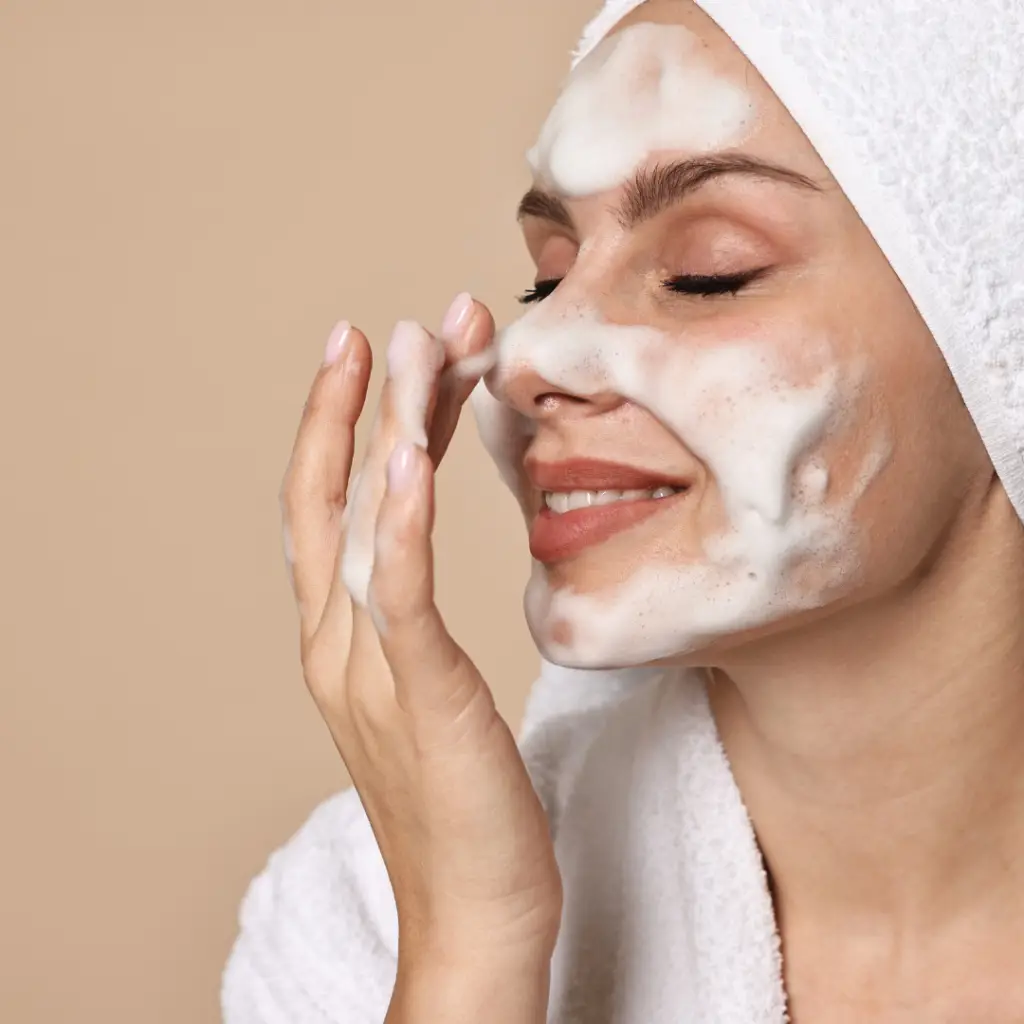
Why Your Skin Gets Dry in Murrieta While It Is Still 90 Degrees Outside
Every September we hear the same thing. Tight skin, flaking around the nose, makeup that will not sit right. Patients assume winter arrived early. It is usually something else entirely.
Dry skin is not a winter problem here.
If you live in the Temecula Valley, you already know the weather does not follow the rules. It can be 92 degrees in the first week of October and your skin still feels like it belongs to someone else. Tight after cleansing. Flaky in the same three spots. Foundation separating by noon when it was fine in July.
Most people blame the wrong thing. They assume they need to exfoliate more, or that the product they have used for two years suddenly stopped working. So they scrub harder, add a stronger active, or swap to a foaming cleanser that squeaks. Within two weeks the skin looks worse, and now there is redness on top of the dryness.
What is actually happening has very little to do with the temperature.
Your skin is responding to how dry the air is, not how hot it is. Those are two different things, and only one of them shows up on a thermometer.
Three things stack up at once.
None of these would be much of a problem alone. Arriving together inside a six week window is what makes fall feel so abrupt on the skin.
Humidity drops off a cliff
Inland Southern California loses most of its moisture in early fall. When the air holds less water, water leaves your skin faster through normal evaporation. Your skin is not producing less oil. It is losing more water, and those two problems need two different fixes.
Offshore winds arrive
Santa Ana conditions push hot, very dry air through the valley from the desert side. Wind strips surface moisture mechanically, on top of the humidity drop. This is why the dryness often shows up over a single weekend instead of gradually.
Summer already thinned the barrier
Months of UV exposure, chlorine, salt water, and heat leave the skin barrier less able to hold moisture in. So the drop in humidity does not land on healthy skin. It lands on skin that spent June through August getting worn down.
The usual response makes it worse.
Flaking looks like buildup, so the instinct is to remove it. But the flaking is a compromised barrier shedding unevenly. Exfoliating a compromised barrier takes away the thing you need most right now.
Here is what patients most often reach for in September. Each one tends to backfire on skin that is already stressed.
- Daily physical scrubs
- Doubling up on acids
- Foaming or stripping cleansers
- Jumping back to high strength retinol
- Hot water on the face
- Layering actives to fix the redness
If a product stings when it never used to sting, that is a barrier signal, not a sign it is working. Pause the actives before you add anything new.
Dry skin lacks oil and is usually a long term skin type. Dehydrated skin lacks water and can happen to anyone, including oily skin. Fall is almost always the second one.
Rebuild first. Correct second.
The order matters more than the products. Anything designed to correct tone or texture works better on a barrier that is intact, so we ask patients to spend two to three weeks stabilizing before adding correction back in.
Swap the cleanser
Move to a gentle, non-foaming cleanser and cool water. If your face feels tight within a minute of drying off, the cleanser is too strong for this season. This is the single easiest change and often the one that makes the most difference.
Replace the water
A hydrating serum layered under a richer moisturizer helps hold water in the skin. Apply to slightly damp skin so there is something there to hold onto. A moisturizer alone is often not enough once humidity drops.
Restart retinol slowly
Most people pause retinol over the summer, which makes fall the natural restart point. Two nights a week for two weeks, then build from there. Resuming at your old frequency is the most common reason fall skin ends up irritated.
Keep wearing sunscreen
Shorter days do not mean less UV exposure, and pigment that surfaced over the summer will keep deepening without protection. Daily SPF is what protects the work you are about to put in.
Our ZO Skin Health line is what we most often build these seasonal adjustments around. Your provider can map a specific routine to your skin rather than guessing from a shelf.
What we actually recommend in September.
Fall gets talked about as resurfacing season, and for some patients that is true. But resurfacing a compromised barrier is a rougher experience with a longer recovery than it needs to be. We usually stabilize first and build toward the bigger treatments.
DiamondGlow
Cleanses, exfoliates gently, and infuses a hydrating serum in the same pass. That combination suits skin that needs help without aggression, which is most skin in early fall.
Signature hydrating facials
Designed to support the barrier and calm surface irritation. This is the workhorse of our fall schedule and the treatment we book most through October.
Gentle chemical peels
Once the barrier is stable, a lighter peel can address uneven tone that surfaced after summer without the downtime of full resurfacing.
Resurfacing, when the timing is right
Erbium, CO2, and Pixel RF Microneedling are all better tolerated once hydration is restored. Waiting a few weeks usually makes for a more comfortable experience than pushing ahead in September.
Fall skin often looks like one problem and is really two. Treating the wrong one is how people spend a whole season getting nowhere.
Dryness, pigment, or both.
Dehydration makes everything look duller, while pigment from the summer becomes more visible as a tan fades. They show up at the same time and they need different plans.
Our Aura Skin Analysis looks beneath the surface at hydration, pigment, and texture, so your plan is built on what is actually there. It takes a few minutes and it is where nearly every treatment plan at Naturalness starts.
Consistency is the other half of it. Barrier health is maintenance, not a single appointment, which is why our membership patients tend to move through fall with far less of this. Regular facials plus a routine that shifts with the season is the whole strategy.
Book a Consultation View MembershipsFrequently Asked Questions
Why does my skin feel dry when it is still hot outside?
Should I stop using retinol in the fall?
Is fall really the best time for laser treatments?
How do I know if it is dryness or dehydration?
Can a facial actually help with this or is it just relaxing?
What if I have melasma or darker skin and cannot do laser?
Fall does not have to be the season your skin fights you.
Schedule a consultation and Aura Skin Analysis at Naturalness Med Spa in Murrieta. We will look at what your skin actually needs this season and build a plan around it.
Book Your Consultation Or call us at (951) 521-1153Treat Now, Pay Later With PatientFi
Building a seasonal skin plan should not have to wait for perfect timing. We offer PatientFi so you can start now and pay over time, with a simple application and flexible monthly plans.
Get StartedWritten by the team at Naturalness Med Spa in Murrieta, California.
This article is for general education and is not medical advice. Individual skin needs vary. Please schedule a consultation to discuss what is appropriate for you.
